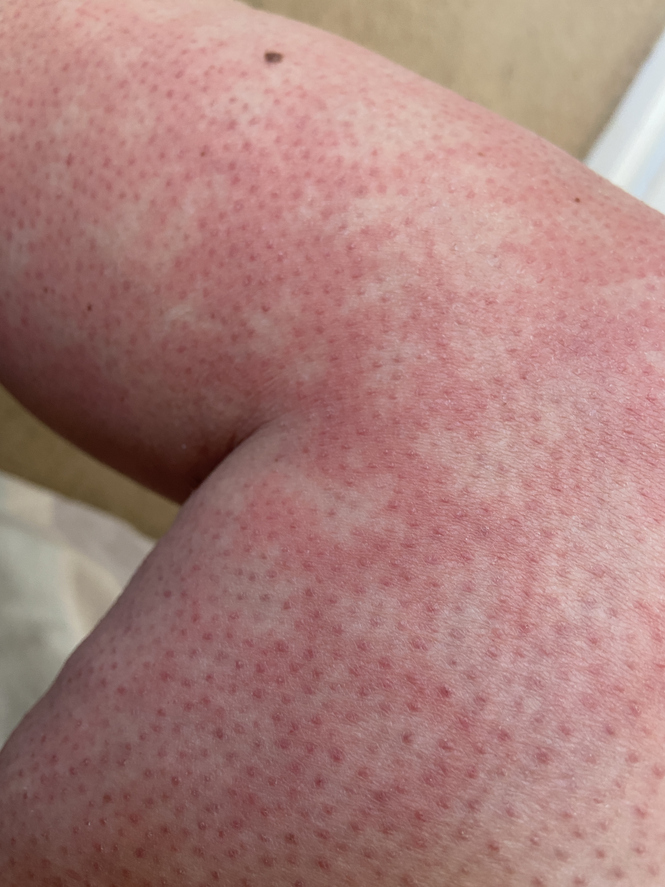
It’s a cold winter evening, and you’re curled up with your laptop resting on your thighs or a heating pad pressed against your back. Weeks later, you notice a reddish-brown, web-like discoloration on your skin. It doesn’t hurt, but it definitely doesn’t look normal.
What you’re seeing might be toasted skin syndrome, a condition caused by repeated exposure to heat sources that gradually damage your skin over time.

What Is Toasted Skin Syndrome?
Toasted skin syndrome, medically known as erythema ab igne, results from chronic exposure to heat sources that aren’t hot enough to cause an immediate burn, but are warm enough to gradually damage the skin with repeated contact.
The heat causes changes to the skin’s pigmentation and blood vessels, creating a characteristic mottled, lacy, or net-like pattern of discoloration. The affected areas typically appear reddish-brown, purple, or grayish. While usually painless, it can be cosmetically concerning and, in rare cases, lead to more serious complications.
Historically seen in people who sat close to fireplaces or wood-burning stoves, today it’s more commonly caused by modern heat sources like space heaters, heating pads, laptops, and heated car seats.
What Causes Toasted Skin Syndrome?
Toasted skin syndrome develops when your skin is repeatedly exposed to temperatures between 109°F and 113°F (43°C to 45°C). At these temperatures, the heat isn’t strong enough to cause an immediate burn, but over time damages the skin’s blood vessels and causes pigment changes.
Common causes include:
- Laptops: Resting a laptop directly on your thighs for extended periods is one of the most common modern causes, sometimes called “laptop thigh” or “laptop-induced erythema ab igne.”
- Heating pads and electric blankets: Using these devices for several hours at a time or falling asleep with them on can cause skin damage.
- Space heaters: Sitting close to space heaters, especially with them directed at the same spot daily.
- Heated car seats: Daily use at high temperatures can affect the backs of the thighs and lower back.
- Hot water bottles: Repeatedly using these on the same area for pain relief.
Toasted Skin Syndrome Symptoms and Appearance
Toasted skin syndrome develops gradually, often over weeks or months. The condition is usually painless, which is why many people don’t notice it until the discoloration becomes visible.
What Does Toasted Skin Syndrome Look Like?
- Lacy or reticular pattern: The discoloration appears in a net-like or web-like pattern on the skin
- Reddish-brown, purple, or grayish color: The affected area may start as red or pink and darken over time to brown, purple, or gray
- Mottled appearance: The skin may look blotchy or uneven in color
- Hyperpigmentation: Dark patches or spots may develop in the affected area
- Atrophy: In chronic cases, the skin may become thin or develop a wrinkled texture
- Common locations: Legs (especially thighs and shins), lower back, abdomen, arms, or anywhere else that’s been exposed to repeated heat
Early Warning Signs
In the early stages, you might notice:
- Mild redness or pinkness in the area exposed to heat
- A warm or heated sensation on the skin during or after heat exposure
- Slight itching or tingling (less common)
If caught early and the heat source is removed, the discoloration may fade completely. However, if heat exposure continues, the changes can become permanent.
Is Toasted Skin Syndrome Dangerous?
In most cases, toasted skin syndrome is primarily a cosmetic concern. However, there are potential complications:
- Permanent pigmentation: If heat exposure continues, the discoloration may become permanent.
- Skin changes: Chronic heat exposure can cause the skin to become thinner and develop a leathery appearance.
- Skin cancer risk: While rare, there have been documented cases of skin cancer developing in areas affected by chronic erythema ab igne. The repeated heat exposure may increase the risk of squamous cell carcinoma, particularly in people who have had the condition for many years without treatment. If you notice any changes, such as new growths, sores that won’t heal, or areas that become painful or bleed, see a dermatologist immediately.
Toasted Skin Syndrome Treatment
The most important step is removing the source of heat exposure. This alone will often prevent further damage and allow the skin to begin healing.
Stop Using the Heat Source
- Move away from space heaters or reposition them to avoid direct skin contact
- Use a laptop desk or cooling pad instead of placing the laptop directly on your lap
- Limit heating pad use to 15-20 minutes at a time, and never fall asleep with a heating pad on
- Lower the temperature on heated car seats or limit use
- Keep a barrier (like a blanket or pillow) between your skin and heat sources when possible
Topical Treatments
For mild to moderate discoloration, your dermatologist may recommend:
- Retinoids (Tretinoin or Retinol): Prescription-strength tretinoin or over-the-counter retinol can help improve skin texture, reduce hyperpigmentation, and stimulate collagen production.
- Hydroquinone: This topical skin-lightening agent can help fade hyperpigmentation and even out skin tone, typically used for a limited time under dermatologist supervision.
- Vitamin C Serums: This antioxidant can help brighten the skin and reduce pigmentation.
- Niacinamide: This anti-inflammatory ingredient helps improve skin barrier function and reduce discoloration.
Laser and Light-based Treatments
For more persistent or severe cases, dermatologists may recommend:
- Intense Pulsed Light (IPL): IPL treatments can target pigmentation and improve the appearance of discolored skin. Multiple sessions are usually needed for optimal results.
- Laser Resurfacing: Fractional laser treatments can stimulate collagen production, improve skin texture, and reduce the appearance of pigmentation.
When to See a Dermatologist for Toasted Skin Syndrome
You should schedule an appointment with a dermatologist if:
- You notice new or worsening discoloration on your skin in areas exposed to heat
- The affected area develops new growths, sores, or lesions
- You experience pain, bleeding, or changes in the texture of the discolored skin
- The discoloration doesn’t improve after you’ve stopped using heat sources
- You’re concerned about the appearance of the affected area and want to explore treatment options
- You have a sore or spot in the area that won’t heal
Early evaluation and treatment can prevent complications and improve the appearance of affected skin.
Get Expert Dermatology Care at Cascade Eye & Skin Centers
If you’ve noticed unusual discoloration on your skin or suspect you may have toasted skin syndrome, the dermatology providers at Cascade Eye & Skin Centers are here to help. We provide comprehensive skin evaluations, accurate diagnoses, and personalized treatment plans to address pigmentation concerns and protect your skin health.
Serving patients throughout the South Sound, including Auburn, Bonney Lake, Gig Harbor, Puyallup, Sunrise, and University Place, we’re committed to helping you maintain healthy, beautiful skin year-round.
Schedule a dermatology appointment today and get the expert care your skin deserves.