A skin cancer diagnosis can feel overwhelming, especially when you are trying to understand which treatment path is right for you. The good news is that skin cancer is highly treatable, especially when caught early and managed by an experienced dermatology team. At Cascade Eye & Skin Centers, patients throughout Auburn, Bonney Lake, Gig Harbor, Olympia, Puyallup, Sunrise, and University Place have access to some of the most advanced treatment options available today.
This guide walks through the leading approaches to treating skin cancer, why Mohs surgery has become the standard of care for many cases, and how to know which option fits your specific diagnosis.

Understanding Your Skin Cancer Diagnosis
Before choosing a treatment path, it helps to understand what type of skin cancer you are dealing with and why acting quickly makes such a difference. Skin cancer forms when UV damage causes cells to grow and divide abnormally, and the cell type involved determines how the cancer behaves and spreads.
The Three Most Common Types
Basal cell carcinoma is the most frequently diagnosed skin cancer. It tends to grow slowly and rarely spreads beyond the skin, but it can still damage surrounding tissue if it goes untreated for too long.
Squamous cell carcinoma grows faster and often appears as a rough, scaly patch that may bleed or crust over.
Melanoma is the least common of the three but the most dangerous, since it can spread to other organs if it is not caught early. According to the American Academy of Dermatology, one in five Americans will develop some form of skin cancer by age 70, which makes routine skin checks an important part of preventive care.
Why Early Treatment Matters
The earlier a skin cancer is identified, the more treatment options a patient typically has, and the less invasive those options tend to be. A small, early-stage lesion caught during a routine visit can often be treated in a single outpatient procedure with minimal scarring. Waiting too long allows the cancer to grow deeper into the skin, which can mean a longer procedure, a larger treatment area, and a more noticeable scar. Regular screening, including an annual full-body skin exam, gives your dermatologist the best chance of finding changes while they are still easy to treat.
Mohs Micrographic Surgery: The Gold Standard Treatment for Skin Cancer
For many types of skin cancer, particularly those on the face, ears, hands, and other cosmetically sensitive areas, Mohs micrographic surgery offers the most precise and effective treatment for skin cancer available today. The technique allows the surgeon to remove cancerous tissue in thin layers while preserving as much healthy skin as possible.
How the Procedure Works
Mohs surgery is performed in stages, all during a single office visit, so patients typically know the outcome before they leave. Here is what the process generally looks like:
- The treatment area is numbed with a local anesthetic to make the procedure as comfortable as possible.
- The surgeon removes a thin layer of visible tumor tissue and bandages the area while it is examined.
- The removed tissue is processed and examined under a microscope in the on-site lab.
- If cancer cells remain at the edges, the surgeon maps their exact location.
- Only the areas that still show cancer are removed in the next layer.
- These steps repeat until the margins are completely clear.
- Once the cancer is fully removed, the wound is closed and repaired for the best possible cosmetic outcome.
You can read a full walkthrough of the procedure in this Mohs surgery overview from our team.
Why Mohs Delivers Superior Results
Because the surgeon examines 100 percent of the tissue margins during the procedure itself, Mohs surgery offers a cure rate as high as 99 percent for skin cancers that have not been treated before. This level of precision also means less healthy tissue is removed than with a standard excision, which matters most when the cancer sits somewhere with little room to spare, like the eyelid, nose, or ear. For patients considering Mohs surgery, Cascade’s fellowship-trained surgeons perform the procedure in a dedicated surgical suite designed specifically for this specialty.
Other Treatment Options for Skin Cancer in the South Sound
While Mohs surgery is the right choice for many patients, it is not the only path to treating skin cancer successfully. Your dermatologist will weigh factors like tumor type, location, and depth before recommending an approach, and sometimes a non-surgical option is the better fit.
Superficial Radiotherapy (SRT)
Superficial radiotherapy uses low-energy radiation, similar to an X-ray, to treat certain non-melanoma skin cancers without any cutting or stitches. Each session lasts only a few minutes, though a full course usually requires several visits spread over a number of weeks. SRT works well for patients who want to avoid surgery or who have a tumor that is not a good candidate for excision, and most insurance plans, including Medicare, cover the treatment.
Traditional Excision and Topical Treatments
For some smaller or less aggressive lesions, a standard surgical excision may be enough to remove the cancer with a wide margin of healthy tissue around it. In select cases, particularly with very early or superficial cancers, topical medications or light-based therapies can also be effective. Your dermatologist will explain which option best balances thorough removal and cosmetic outcome for your specific diagnosis.
Choosing the Right Skin Cancer Treatment for You
The best treatment plan depends on your diagnosis, the cancer’s location, and your personal preferences, which is why a conversation with a fellowship-trained dermatologist matters so much.
Signs You Should See a Dermatologist
Watch for these changes in your skin, and schedule an evaluation if you notice any of the following:
- A new mole or spot that looks different from the others on your body
- A sore that bleeds, crusts, or does not heal within a few weeks
- A mole with uneven color, a blurry border, or an irregular shape
- A growth that is changing in size, shape, or texture over time
- A rough, scaly patch that persists on sun-exposed skin
What to Expect for Appointment Scheduling
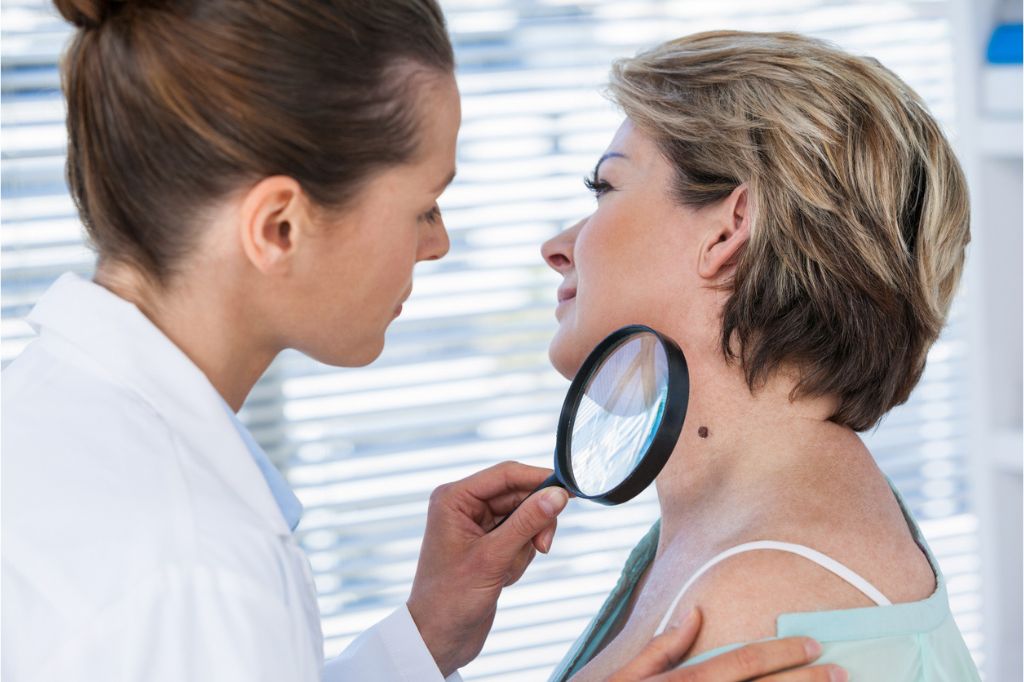
During your visit, your provider will examine the area of concern and may recommend a biopsy to confirm the diagnosis before discussing treatment options for skin cancer with you. If Mohs surgery is recommended, our team will walk you through scheduling, preparation, and what recovery looks like so you feel confident going into your procedure.
Get Expert Skin Cancer Care at Cascade Eye & Skin Centers
At Cascade Eye & Skin Centers, our dermatology team combines fellowship-trained expertise with a genuine commitment to helping patients understand every step of their care. Whether you need a routine screening, a biopsy, or a full Mohs surgery plan, our providers walk you through what to expect so you always know what comes next.
Serving patients throughout the South Sound, including Auburn, Bonney Lake, Gig Harbor, Puyallup, Sunrise, and University Place, we are dedicated to catching skin cancer early and treating it with precision.
Schedule an appointment with one of our dermatologists today to find the right treatment for skin cancer and take the next step toward protecting your skin for years to come.