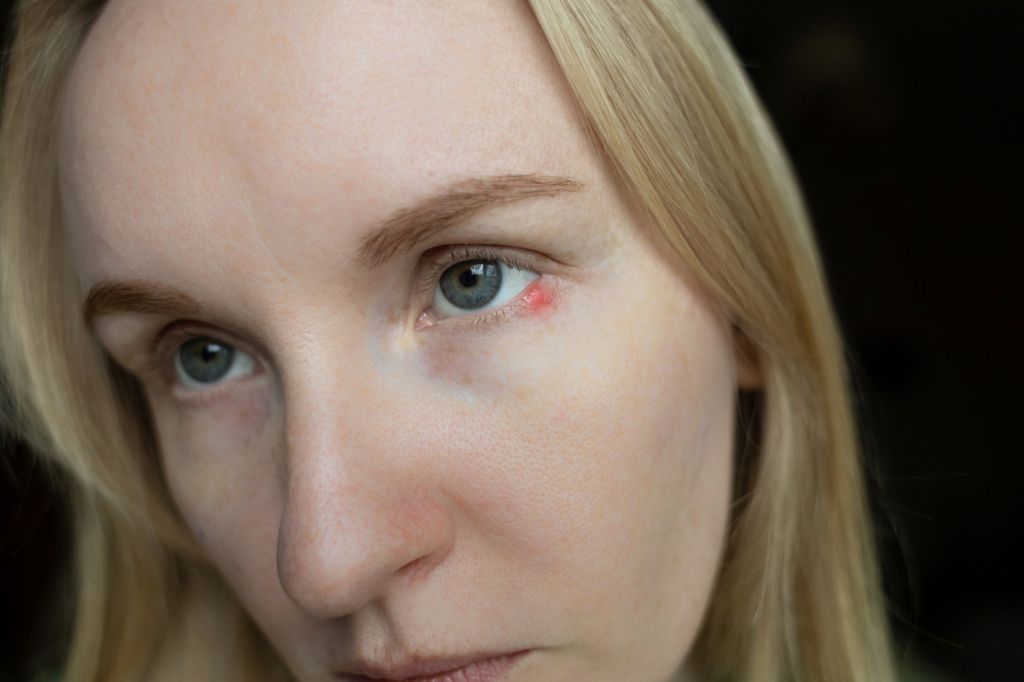
You wake up one morning and feel something tender near the edge of your eyelid. Maybe it looks like a small pimple, or maybe there’s a firmer lump sitting deeper under the skin. Eyelid bumps are surprisingly common, and while they’re rarely dangerous, they’re also not all the same. Getting the right diagnosis matters because different conditions call for very different approaches to treatment.
At Cascade Eye & Skin Centers, our ophthalmology team sees eyelid concerns regularly and understands how unsettling it can be to notice a change near your eye. This guide walks you through the most common causes of an eyelid bump, how to tell them apart, and when it’s time to get a professional opinion.

What Causes a Bump on Your Eyelid?
Your eyelids are home to dozens of tiny glands, follicles, and oil-producing structures that work together to keep your eyes healthy and lubricated. Because so many small components are packed into a small area, blockages and infections can happen fairly easily. Most eyelid bumps fall into a few well-known categories, and understanding which structures are involved goes a long way toward figuring out what you’re dealing with.
Styes: The Classic Eyelid Infection
A stye, known medically as a hordeolum, is a bacterial infection that develops in one of the small glands along your eyelid margin. There are two types. An external stye forms at the base of an eyelash follicle and tends to look like a red, painful pimple right at the lash line. An internal stye develops inside the eyelid, in one of the meibomian glands that produce the oily layer of your tear film, and it can feel more like a tender lump just beneath the eyelid surface.
Styes are usually caused by Staphylococcus bacteria and develop quickly, often becoming noticeable within a day or two. The area typically feels warm and sore to the touch, and you may notice some swelling in the surrounding eyelid. Stye formation is more common in people who frequently touch their eyes, wear contact lenses, or have a history of blepharitis, a condition involving chronic inflammation along the eyelid margin.
Chalazions: The Slower-Growing Bump
A chalazion forms when a meibomian gland becomes blocked, and the oil inside it hardens into a small cyst. Unlike a stye, a chalazion is usually not caused by an active infection, which means it tends to be far less painful, though it can still cause noticeable swelling.
Where a stye appears quickly and feels tender, a chalazion typically develops more slowly over days to weeks and presents as a firmer, rounder lump that sits slightly further from the eyelid edge. Some people mistake a chalazion for a stye in its early stages, particularly if mild inflammation is present. Over time, though, a chalazion usually becomes less red and more defined as it hardens. Meibomian gland dysfunction is the most common underlying factor and affects people of all ages. If you’ve had one chalazion, you’re more likely to develop another, particularly if the gland function in your eyelids isn’t fully restored.
Stye vs. Chalazion: How to Tell Them Apart
Both a stye and a chalazion involve the eyelid’s oil-producing glands, and both can cause swelling and discomfort, so it’s easy to see why people confuse them. Knowing the differences can help you understand what your eyelid is doing and how to respond.
Key Differences in Location and Feel
The location of a bump offers one of the clearest clues. A stye almost always forms at the very edge of the eyelid, close to the lash line, because it originates in a follicle or gland that opens there. A chalazion tends to sit a bit further back on the eyelid, sometimes far enough from the lash line that you can feel it more than see it at first glance.
Pain level is another useful distinguishing factor. Styes are typically quite tender, especially when touched or when you blink. Chalazions, by contrast, are often painless once the initial inflammation settles down, though they can cause a dull pressure sensation if they grow large enough to press against the eye. A large chalazion can temporarily blur your vision by pressing on the cornea.
How Each Condition Progresses
Styes tend to follow a familiar cycle: they appear, become progressively sore and swollen over a few days, and then either drain on their own or gradually resolve with warm compress treatment. Most styes clear up within one to two weeks. If yours is not improving or keeps returning to the same spot, that warrants a closer look from an eye doctor.
Chalazions are less predictable. Some resolve on their own over several weeks, while others persist for months and require treatment to drain the blocked gland. If a chalazion goes away and then comes back repeatedly in the exact same location, your doctor may recommend a biopsy to rule out other causes, though this scenario is uncommon.
Other Conditions That Can Cause an Eyelid Bump
Styes and chalazions account for the majority of eyelid bumps, but a few other conditions can cause similar symptoms. Recognizing when something doesn’t quite fit the usual pattern is worth paying attention to.
Milia and Xanthelasma
Milia are tiny, white or yellowish cysts that form when dead skin cells become trapped beneath the skin’s surface. They’re common around the eyes and on the eyelids, and unlike styes or chalazions, they’re completely painless and involve no infection or gland blockage. Milia tend to look like small white dots and are often found in clusters.
Xanthelasma are flat, yellowish deposits that form on or around the eyelids when cholesterol accumulates beneath the skin. They’re soft, not tender, and grow slowly over time. While xanthelasma is harmless on its own, its presence can sometimes signal elevated cholesterol levels, so it’s worth mentioning it to your doctor. A dermatology evaluation can help determine whether any additional follow-up is needed.
Eyelid Growths That Require Prompt Attention
In rare cases, a bump on the eyelid may represent something other than a benign gland blockage or infection. Eyelid skin cancers, including basal cell carcinoma, squamous cell carcinoma, and sebaceous carcinoma, can sometimes mimic the appearance of a chalazion or benign cyst. Sebaceous carcinoma, in particular, tends to originate in the meibomian glands and can be mistaken for a recurring chalazion.
Features that should prompt an evaluation include a bump that keeps returning after treatment, one that bleeds, ulcerates, or changes rapidly in size, or any lump accompanied by loss of nearby eyelashes. These signs don’t necessarily mean something serious is happening, but they do mean a proper examination is important. An eye doctor can assess whether a lesion needs further investigation or referral to a specialist.
How Eyelid Bumps Are Treated
Treatment depends on the type and size of the bump, how long it has been present, and how much it’s affecting your comfort or vision. For most common eyelid bumps, conservative care is the starting point.
Here’s a general overview of what treatment can look like depending on the diagnosis:
- Warm compresses: Applying a warm, damp cloth to the closed eyelid for 10 to 15 minutes, several times per day, helps soften the blocked oil and encourage natural drainage. This is the first-line approach for both styes and early chalazions.
- Gentle eyelid massage: After a warm compress, apply light pressure along the eyelid to help move softened oil toward the gland opening. Your eye doctor can show you the correct technique to avoid irritating the area.
- Antibiotic drops or ointment: If a stye involves a bacterial infection, your doctor may prescribe a topical antibiotic to clear it up more quickly and reduce the risk of spreading.
- Steroid injections: For persistent chalazions that don’t respond to warm compresses, an in-office corticosteroid injection can reduce inflammation and help the cyst resolve without surgery.
- Incision and drainage: When a chalazion or large stye does not clear up on its own and conservative measures haven’t worked, a minor in-office procedure can drain the blocked gland. This is typically quick and performed under local anesthesia, with most patients returning to normal activities within a day or two.
When to See a Doctor for an Eyelid Bump
Most eyelid bumps are not medical emergencies, but some situations deserve professional attention sooner rather than later. You should schedule an appointment if:
- The bump has not improved after two weeks of warm compress treatment at home
- You develop significant swelling that spreads beyond the eyelid toward your cheek or nose, which can be a sign of a more serious infection called periorbital cellulitis
- Your vision changes or feels blurry, which may indicate pressure on the cornea from a large chalazion
- The same bump returns repeatedly in the same location after appearing to heal
- The bump bleeds, crusts in a way that looks unusual, or causes your eyelashes to fall out in the affected area
- You have a painful, red eyelid with fever or general illness
Conditions like these may involve your eyelid health in ways that go beyond a simple gland blockage and deserve a thorough evaluation.
Expert Eyelid Care at Cascade Eye & Skin Centers
A bump on your eyelid can be frustrating to deal with, especially when it lingers or keeps coming back. At Cascade Eye & Skin Centers, our ophthalmology team provides comprehensive evaluation and treatment for eyelid conditions of all kinds, from common styes and chalazions to more complex concerns requiring specialized care.
Serving patients throughout the South Sound, including Auburn, Bonney Lake, Gig Harbor, Puyallup, Sunrise, and University Place, we’re here to give you the answers and treatment you need to feel better. Schedule an appointment online with one of our eye doctors today.