You’ve tried the pore strips. You’ve steamed your face and squeezed until your eyes water. Maybe you’ve even picked up a tool from a late-night social media scroll. And yet, the blackheads are still there, sitting in the same spots on your nose, chin, and forehead, seemingly unmoved by everything you throw at them.
Blackheads are one of the most stubborn skin concerns precisely because most popular removal methods only address the surface. The real problem lives deeper inside the pore, where a mix of excess oil, dead skin cells, and oxidized debris creates the dark plugs you see. The good news is that effective blackhead removal does exist. It just requires the right ingredients, the right professional treatments, and sometimes a little patience.
At Cascade Eye & Skin Centers, our dermatology team helps patients achieve clearer, healthier skin with evidence-based approaches tailored to their skin type and goals. Here’s what actually works.

What Are Blackheads, and Why Are They So Persistent?
Before diving into treatments, it helps to understand what you’re dealing with. Blackheads are a form of non-inflammatory acne called open comedones. They form when a pore becomes clogged with excess sebum and dead skin cells. Unlike whiteheads, the pore opening remains exposed to air, which causes the trapped material to oxidize and turn dark. That color comes from oxidation, not dirt, which is why scrubbing harder rarely helps.
Why Blackheads Keep Coming Back
Blackheads tend to reappear in the same spots because those areas have higher concentrations of sebaceous glands. The nose, chin, and forehead are the most common sites. Once a pore has been stretched or repeatedly clogged, it becomes more prone to future blockages. Squeezing can temporarily clear the plug but also irritates the pore lining, making recurrence more likely and sometimes causing inflammation or scarring.
The Difference Between Blackheads and Sebaceous Filaments
One reason people feel like blackhead removal never works is that they may be targeting sebaceous filaments instead. These are thin, tube-like structures inside the pore that help channel oil to the skin’s surface. They appear as small, grayish dots and are a normal part of pore anatomy. Unlike blackheads, they cannot be permanently removed because they are part of healthy skin function. If you are not sure what you are dealing with, our blog on sebaceous filaments vs blackheads can help you tell the difference.
At-Home Blackhead Removal Treatments
Consistent at-home care is the foundation of any effective blackhead removal routine. The right ingredients, used correctly and regularly, can prevent new blackheads from forming while gradually clearing existing ones.
Salicylic Acid
Salicylic acid is the most widely recommended ingredient for blackhead removal, and for good reason. As a beta-hydroxy acid (BHA), it is oil-soluble, meaning it can penetrate the pore lining rather than remain on the skin’s surface. Once inside the pore, it breaks down the bonds between dead skin cells and dissolves the sebum plug that forms the blackhead. A clinical evaluation published in the Journal of the American Academy of Dermatology found a significant reduction in blackheads with consistent use of salicylic acid-based products, as measured by both clinical grading and patient self-assessment.
Products containing 0.5% to 2% salicylic acid are appropriate for most skin types and are available in cleansers, toners, and leave-on serums. For best results, start with two to three times per week and increase gradually as your skin adjusts.
Topical Retinoids
Retinoids are vitamin A derivatives that work by regulating skin cell turnover, preventing dead cells from accumulating in pores in the first place. Rather than targeting the blackhead after it forms, retinoids address the conditions that allow it to develop. The American Academy of Dermatology’s updated acne treatment guidelines strongly recommend topical retinoids as a cornerstone of comedonal acne treatment.
Over-the-counter options like adapalene 0.1% gel are available without a prescription. Prescription-strength tretinoin works more quickly and at higher concentrations. Both require consistent use over several weeks before results become visible. Some patients experience a brief period of skin purging when first starting a retinoid. Our blog on skin purging explains what to expect and how to manage it.
Building an Effective At-Home Routine
A simple, consistent routine tends to outperform an overcomplicated one. Here is a practical framework for managing blackheads at home:
- Cleanse once or twice daily with a gentle, pH-balanced, oil-free cleanser. Avoid harsh soaps that strip the skin barrier.
- Exfoliate with a salicylic acid product two to three times per week. Do not layer multiple exfoliants in one session.
- Apply retinoid on alternate evenings to avoid irritation, especially when starting out.
- Moisturize with a lightweight, non-comedogenic formula. Skipping moisturizer leads to more oil production, not less.
- Use SPF daily. Retinoids increase sun sensitivity, and unprotected sun exposure can worsen post-inflammatory changes.
Professional Blackhead Removal Treatments
When at-home care is not enough, or when blackheads are widespread and persistent, professional treatments offer a deeper and more targeted solution.
Chemical Peels
A professional chemical peel removes the outer layers of dead skin cells and penetrates the pore lining in ways that over-the-counter products cannot replicate. Salicylic acid peels are particularly well-suited for blackhead-prone skin because of the ingredient’s ability to dissolve pore blockages while reducing oiliness. At Cascade Eye & Skin Centers, our chemical peels are customized to each patient’s skin type and concern, ranging from gentle superficial peels with no downtime to medium-depth peels for more significant congestion and scarring.
A series of peels, spaced several weeks apart, tends to deliver the most lasting results for ongoing blackhead management. Our team can also recommend a pre-peel regimen, often including tretinoin, to enhance your results.
Professional Extraction and Aesthetician Services
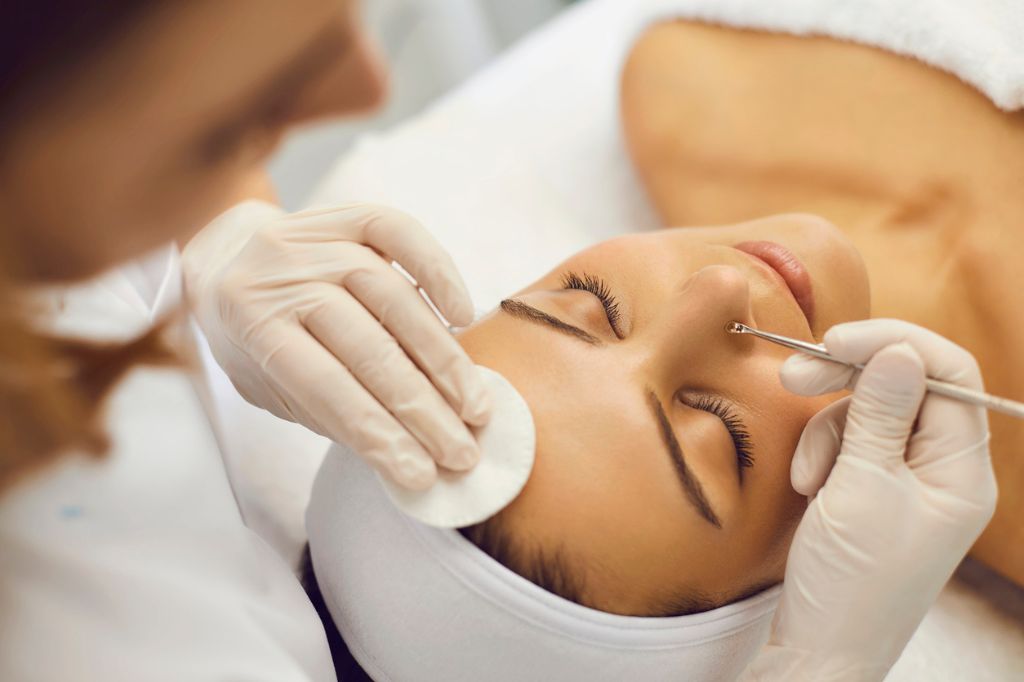
Manual extraction performed by a trained aesthetician or dermatology provider is one of the safest and most immediately satisfying forms of blackhead removal. Unlike at-home squeezing, professional extraction uses sterile tools and proper technique to clear the pore without damaging surrounding tissue or introducing bacteria. The skin is typically warmed beforehand to soften the follicular plug, making extraction easier and less traumatic to the pore.
Our skincare services include professional extractions performed by master aestheticians specializing in congested, acne-prone skin. These appointments also offer the opportunity to get personalized guidance on your at-home routine.
DiamondGlow and HydraFacial
For patients seeking a treatment that combines exfoliation, extraction, and hydration in a single session, DiamondGlow and HydraFacial are two of the most effective options. Both treatments use a vortex-style suction technology to draw debris and blackheads out of the pore while simultaneously infusing the skin with nourishing serums. The result is cleaner pores, smoother texture, and a noticeable brightness that is difficult to achieve with topical products alone.
DiamondGlow uses a diamond-tipped wand to physically exfoliate the skin surface while vacuuming out pore congestion, making it a strong choice for patients with textural concerns alongside blackheads. HydraFacial follows a similar multi-step process that includes a gentle acid peel, painless extraction, and hydrating serum infusion, all in one treatment. Both are well-tolerated across skin types and require no downtime, making them easy to fit into a regular skincare maintenance schedule.
When to See a Dermatologist
Most people can manage mild blackheads with consistent at-home care. However, it is worth scheduling a dermatology appointment when:
- Blackheads are widespread or present on areas beyond the nose and chin
- Over-the-counter products have not improved the situation after 12 weeks of consistent use
- Blackheads are accompanied by inflamed pimples, cysts, or nodules
- You are developing scarring or post-inflammatory darkening
- You want access to prescription-strength treatments like tretinoin or professional procedures
A dermatologist can also rule out conditions such as sebaceous filaments or milia, which are often mistaken for blackheads and do not respond to the same treatments. Our acne care team takes a comprehensive approach, combining medical-grade topicals, professional treatments, and personalized skincare recommendations.
What Does Not Work for Blackhead Removal
Some popular removal methods can actively make the problem worse.
Pore strips can temporarily remove the surface of a blackhead, but they do not reach the deeper portion of the plug or address the underlying cause. Regular use can irritate and weaken the skin around the pore, making it stretch over time. Harsh physical scrubs create micro-tears in the skin barrier, which triggers inflammation and increases oil production. And squeezing at home carries a real risk of pushing debris deeper into the pore, which can cause infection or permanent scarring.
If a blackhead removal method stings, tears, or leaves marks, that is a sign it is causing more harm than good.
Get Expert Skin Care at Cascade Eye & Skin Centers
Blackhead removal requires the right combination of ingredients, technique, and consistency, and the most effective approach is tailored to your specific skin type and concerns. At Cascade Eye & Skin Centers, our dermatology team and master aestheticians provide comprehensive skin care for patients throughout the South Sound, including Auburn, Bonney Lake, Gig Harbor, Puyallup, Sunrise, and University Place.
Schedule an appointment online to get a personalized treatment plan and take the first step toward clearer, healthier skin.