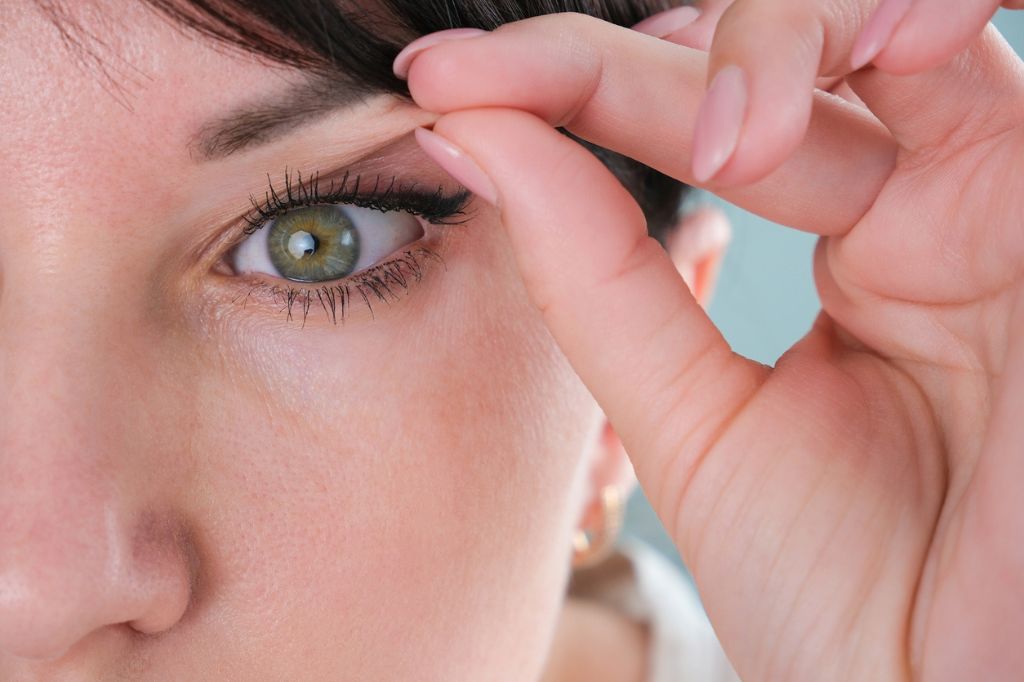
Many people notice their upper eyelids sitting a little lower each year, but they assume it is just a normal part of getting older. Sometimes that is true. Other times, a drooping eyelid signals a treatable condition called ptosis, and it can affect both your appearance and your vision.
At Cascade Eye & Skin Centers, our ophthalmology team regularly evaluates patients with drooping eyelids and helps them understand the cause. If your eyelids feel heavy or your vision seems partially blocked, this guide walks you through the signs to watch for, how the condition is diagnosed, and what treatment can look like.

What Is a Drooping Eyelid?
A drooping eyelid, medically known as ptosis, happens when the upper eyelid sits lower than it should. The lid may cover part of the pupil, which can make your eyes look tired even when you feel well rested. Before looking at treatment, it helps to understand how this condition shows up day to day and what tends to cause it.
Common Signs of Ptosis
Ptosis doesn’t look the same in every patient, but several signs tend to show up together. You might notice one eyelid appears lower than the other, or both eyelids may droop evenly. Some patients raise their eyebrows throughout the day without realizing it, just to compensate for the extra skin blocking their sight.
Other common signs include:
- Difficulty keeping your eyes fully open, especially later in the day
- Eyebrows that feel tired or strained from constant lifting
- Trouble seeing your upper field of vision while driving or reading
- Eyes that look uneven in photos, even when you feel relaxed
- Frequent headaches from straining the forehead muscles
Why Eyelids Begin to Droop
The muscle that lifts your upper eyelid is called the levator muscle, and a smaller muscle called the Müller muscle assists it. As we age, the tendon connecting this muscle to the eyelid can stretch or weaken, and the lid gradually falls. A droopy eyelid can also result from prior eye surgery, contact lens wear, nerve conditions, or an injury that weakens the muscle.
How Is a Drooping Eyelid Diagnosed?
Getting an accurate diagnosis is the first step toward the right treatment, and it takes more than a quick glance in the mirror. Your ophthalmologist will look closely at how your eyelid moves, how much it droops, and how well the underlying muscles still function. This evaluation is what guides every decision that follows.
The Eye Exam Process
During your exam, your doctor will measure how far your eyelid sits relative to your pupil and check how strong your levator muscle is when you try to open your eyes fully. They will also ask about your vision, since ptosis can sometimes block part of your visual field without you realizing how much it has changed.
Tests That Guide Treatment Decisions
One tool your ophthalmologist may use is a simple eye drop test that temporarily stimulates the Müller muscle. How your eyelid responds to this test, along with your muscle strength and the amount of excess skin present, helps your doctor determine which surgical approach will work best.
Surgical Treatment Options for Drooping Eyelids
When ptosis affects your vision or does not improve with nonsurgical measures, surgery is usually the most effective long-term solution. There is more than one way to correct a drooping eyelid, and your surgeon will select the technique that fits your results from the eye exam. Understanding the general differences can help you feel more prepared for your consultation.
Levator Advancement Surgery
Levator advancement is the more traditional approach to ptosis repair. Your surgeon tightens or repositions the levator muscle itself, which is often the best option for patients with more significant droop or weaker muscle function. This technique is performed through an external incision along the eyelid’s natural crease.
Müllerectomy as an Alternative Technique
For select patients whose eyelid responds well to the eye drop test, a mullerectomy offers another path to the same goal. This procedure tightens the smaller Müller muscle instead of the levator muscle and is done from the inside of the eyelid, so there is no visible external incision. It tends to suit patients with mild to moderate ptosis and strong existing muscle function, though your surgeon will confirm which technique fits your eyes during your evaluation.
What to Expect During Recovery
Recovery timelines vary somewhat depending on which technique your surgeon uses, but ptosis repair generally follows a predictable healing pattern. Knowing what happens at each stage can help you plan your schedule and set realistic expectations for healing.
The First Few Days
Mild swelling and some redness in the white part of the eye are common right after surgery. Cold compresses and prescribed eye drops help manage discomfort during this period, and most patients can return to light activities within a day or two.
Long-Term Healing Timeline
Healing continues gradually over the following weeks as the tissue settles into its new position. A general timeline looks like this:
- Days 1 to 3: Mild swelling and redness begin to fade, and any discomfort is usually manageable with over-the-counter pain relief.
- Week 1: Most visible bruising resolves, and patients typically return to work or normal routines.
- Weeks 2 to 4: Eyelid position continues to settle, and final symmetry becomes more apparent.
- Month 1 and beyond: The eyelid reaches its final resting position, and any residual swelling fully resolves.
Your ophthalmologist will schedule follow-up visits to confirm the eyelid is healing properly and sitting at the correct height.
Is Ptosis Repair Right for You?
Whether surgery makes sense depends on how much the drooping affects your vision, your overall eye health, and your evaluation results. A thorough eye exam is the only reliable way to know what your eyelids need and which technique will work best.
Signs You Should See a Specialist
If your eyelids interfere with your peripheral or upper vision, or if you constantly lift your eyebrows to see clearly, schedule an evaluation. An eyelid evaluation can also rule out other causes, since drooping can sometimes signal an underlying nerve or muscle condition that needs separate treatment.
Getting Started at Cascade Eye & Skin Centers
Our ophthalmology team will examine your eyelids, run the appropriate tests, and determine which surgical approach best fits your anatomy and goals. You don’t have to keep raising your eyebrows to see clearly or feel self-conscious about tired-looking eyes in every photo. Serving patients throughout the South Sound, including Auburn, Bonney Lake, Gig Harbor, Puyallup, Sunrise, and University Place, Cascade Eye & Skin Centers is ready to help you see clearly and look like yourself again.
Clearer vision and a more refreshed appearance could be closer than you think. Schedule an appointment online today and find out which treatment is right for you.