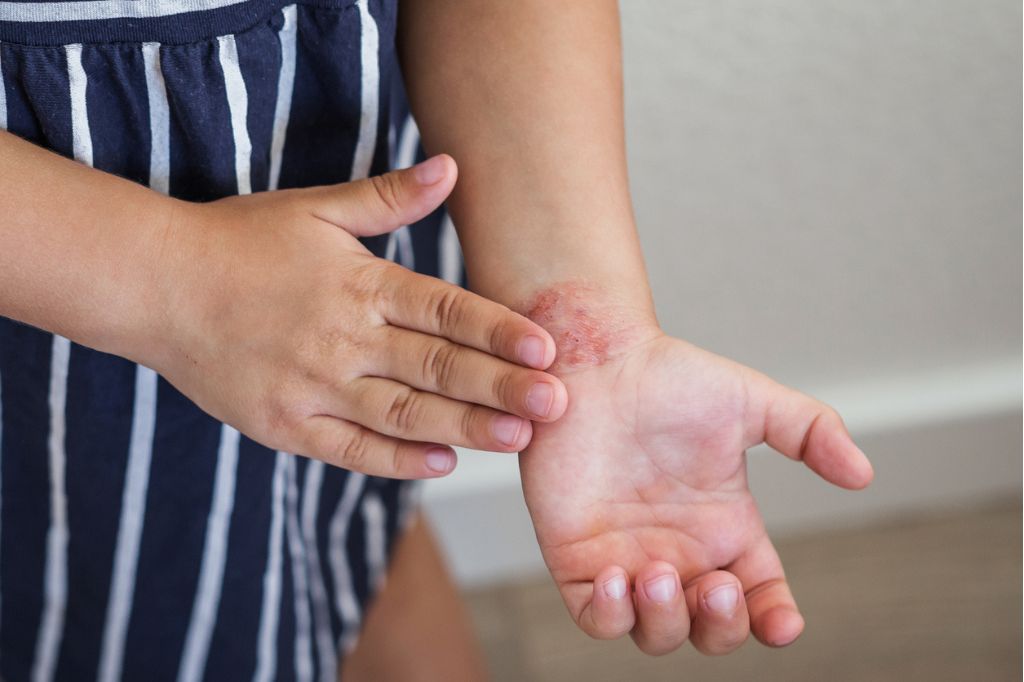
When your child scratches through the night and wakes up with itchy, rough areas on their cheeks, arms, and behind their knees, the whole family can feel worn out. Many parents try one online recommendation after another and still wonder why the rash keeps coming back. Eczema in children is very common, and while it can be stubborn, it usually responds well to a steady home routine paired with the right medical guidance.
Eczema, also called atopic dermatitis, is a long-term condition that causes dry, itchy, and inflamed skin. It often starts in infancy, and for many kids it becomes milder with age. At Cascade Eye & Skin Centers, our dermatology team helps families understand what drives their child’s flares and how to keep them under control.

What Eczema in Children Looks Like
Eczema can look different depending on your child’s age, skin tone, and how active a flare is. Knowing what to watch for helps you respond early, and understanding why flares happen makes your routine easier to follow.
Common Signs at Different Ages
Babies tend to develop eczema that covers most of the body, including the cheeks and chin. At any age, you may notice very dry or scaly skin, bumpy rashes, intense itching, and sometimes oozing or crusting. On darker skin, eczema can look brown, purple, or gray instead of red. If you are unsure whether you are seeing eczema or ordinary dry skin, a dermatologist can help sort it out.
Why Eczema Flares Happen
Children with eczema have a weaker skin barrier, the outer layer that normally holds water in and keeps irritants out. Tiny gaps in this barrier let moisture escape and allow soaps, sweat, and allergens to bother the deeper layers of the skin more easily. Because scratching damages the barrier even further, a single flare can quickly become an ongoing itch-and-scratch cycle.
Building a Daily Skin Care Routine for Eczema in Children
Good skin care is the foundation of eczema treatment, and on calm days it may be all your child needs. A consistent routine helps rebuild the skin barrier, and bathing and moisturizing work best when you treat them as one connected step.
Bath Time Basics
Dermatologists recommend daily short, warm baths over long soaks, since hot water and extra time in the tub pull moisture from the skin. These steps can help bath time work in your child’s favor:
- Fill the tub with warm water, keeping it comfortable, not hot.
- Limit bath time to about 5 to 10 minutes.
- Use a mild, fragrance-free cleanser only where needed, and skip the bubble bath.
- Gently pat your child’s skin partly dry instead of rubbing.
- Apply any prescribed medicine to eczema patches first, then moisturize the rest of the skin.
Choosing the Right Moisturizer
Moisturizer works best when you apply it within three minutes of bathing, while the skin is still slightly damp. Thick creams and ointments usually lock in water better than thin lotions, and plain petroleum jelly is an affordable choice that works well for many kids. Our dermatologist-recommended skincare products can also help you find gentle options made for sensitive skin.
Finding and Avoiding Your Child’s Eczema Triggers
Triggers are everyday things that cause eczema to flare, and they vary from child to child. Noting when flares happen and what your child was doing beforehand helps you spot patterns and make small changes that prevent future flares.
Common Triggers at Home
Sweat and overheating are among the most frequent triggers in children, but many others hide in plain sight. Keep an eye on these common sources of irritation:
- Fragranced shampoo, conditioner, leave-in conditioner, curly creams or oils, body washes or bar soaps, moisturizers, hand soaps, laundry detergents, and dryer sheets
- Wool, polyester, and scratchy clothing tags
- Saliva or food left on the skin after meals
- Dust mites, pet dander, pollen, and tobacco smoke
Dressing your child in loose cotton layers and washing new clothes in a fragrance-free detergent before the first wear can go a long way toward calmer skin.
Cooler Weather and Dry Indoor Air
Fall and winter can be especially hard on sensitive skin because cold air and indoor heating both pull moisture away. Running a humidifier, keeping your child away from heating vents, and moisturizing before bed can all help. Our guide to winter skin care offers more ideas for the colder months.
Helping Your Child Cope With the Itch
Itching is often the hardest part of eczema for both children and parents. Telling a child to stop scratching doesn’t work and can add stress, so gentle strategies often bring more comfort.
Simple Ways to Ease Itching
A cool compress placed on itchy skin for a few minutes, followed by moisturizer, can bring quick relief. For younger kids, distraction with a favorite toy, story, or snack often works better than reminders.
Protecting the Skin From Scratching
Keeping your child’s fingernails short and smooth makes it less likely that scratching will break the skin. Soft cotton gloves at night offer extra protection during sleep. Hold off on over-the-counter anti-itch creams unless your child’s dermatologist recommends one, since some contain ingredients that can irritate eczema.
Get Expert Eczema Care at Cascade Eye & Skin Centers
At Cascade Eye & Skin Centers, our dermatology team combines fellowship-trained expertise with a genuine commitment to helping patients understand every step of their care. Whether you need a routine screening, a biopsy, or a full Mohs surgery plan, our providers walk you through what to expect so you always know what comes next.
Serving patients throughout the South Sound, including Auburn, Bonney Lake, Gig Harbor, Puyallup, Sunrise, and University Place, we are dedicated to catching skin cancer early and treating it with precision.
Schedule an appointment with one of our dermatologists today to find the right treatment for skin cancer and take the next step toward protecting your skin for years to come.