
You notice a new freckle on your shoulder. Maybe it looks a shade darker than the others, or the edge isn’t as clean as you remember. Most spots are harmless, but here’s the reality that makes a quick skin check worth your time: in 2025, the U.S. is expected to see 212,200 melanoma diagnoses and about 8,430 deaths. On the flip side, when melanoma is found early, the 5-year survival rate is 99%. Prevention and early detection save lives.
How to Reduce Your Risk of Developing Melanoma

How Common Is Melanoma?
Melanoma is less common than other skin cancers but causes a higher share of deaths. Risk climbs with UV exposure and indoor tanning, but anyone can develop it, despite age and skin tone.
One blistering sunburn in childhood more than doubles lifetime melanoma risk, and indoor tanning before age 35 raises melanoma risk by 75%. Those two stats alone make a strong case for sunscreen and shade.
What Raises Your Risk for Developing Melanoma?
Some risks are built in, but others are in your control. Knowing both helps you plan.
- History of severe sunburns: Your risk for melanoma doubles if you’ve had more than five sunburns.
- Indoor tanning: The World Health Organization classified tanning beds as carcinogenic back in 2009. They can significantly increase melanoma risk at any age, but especially if used before the age of 35.
- Many moles: Having 100+ moles increases risk 7x.
- Fair or freckled skin, light eyes or hair
- Family history of melanoma in a first-degree relative
Skin Cancer Symptoms: The ABCDEs
Use the ABCDEs when you scan your skin. If a spot resembles any one of these, let us take a look.
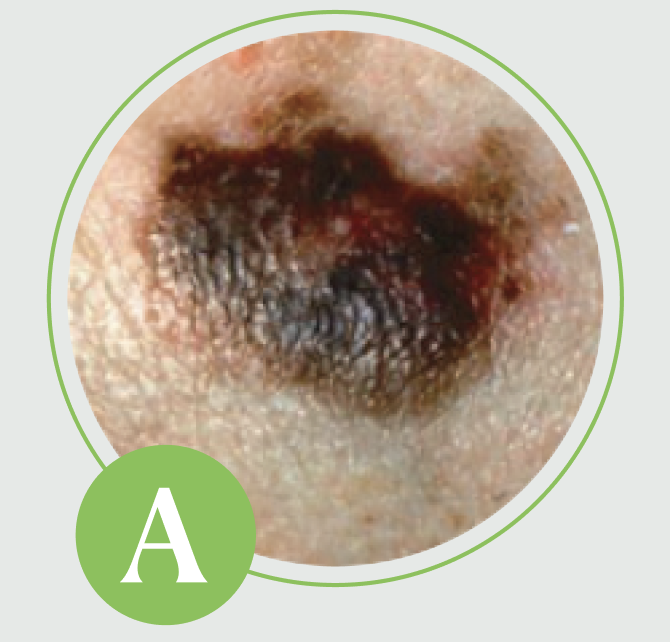
A is for Asymmetry
One half of the spot is unlike the other half.
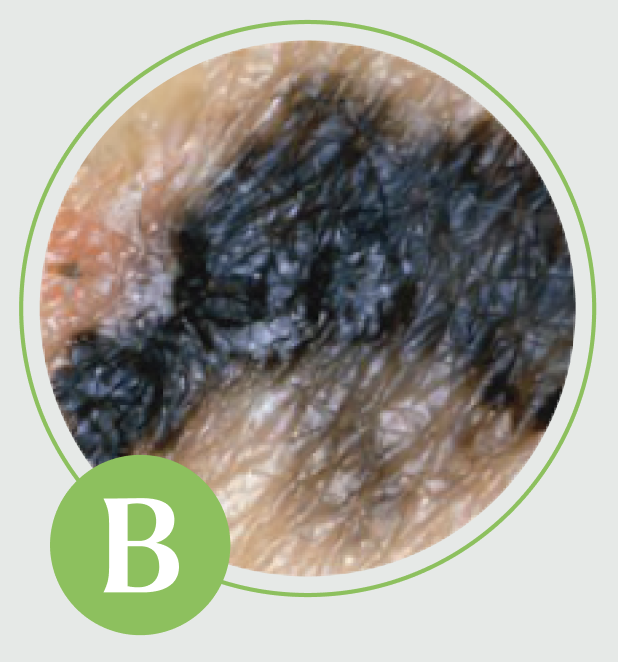
B is for Border
The spot has an irregular, scalloped or poorly defined border.
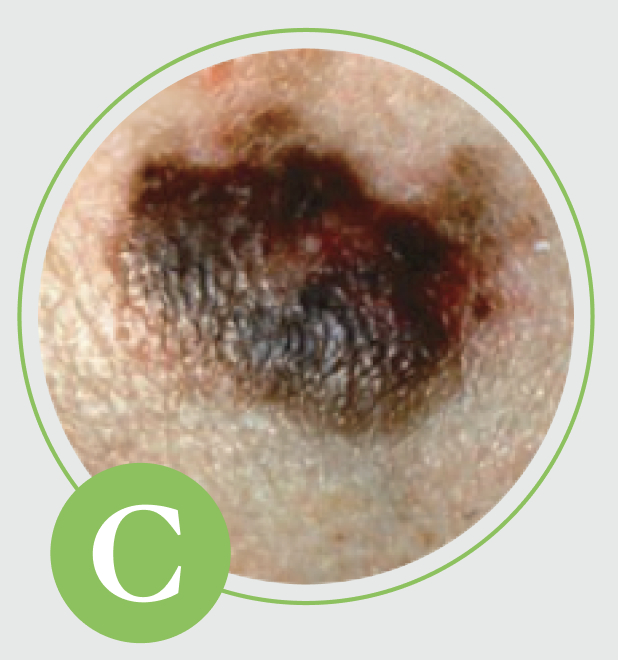
C is for Color
The spot has varying colors, including tan, brown, black, white, red or blue.
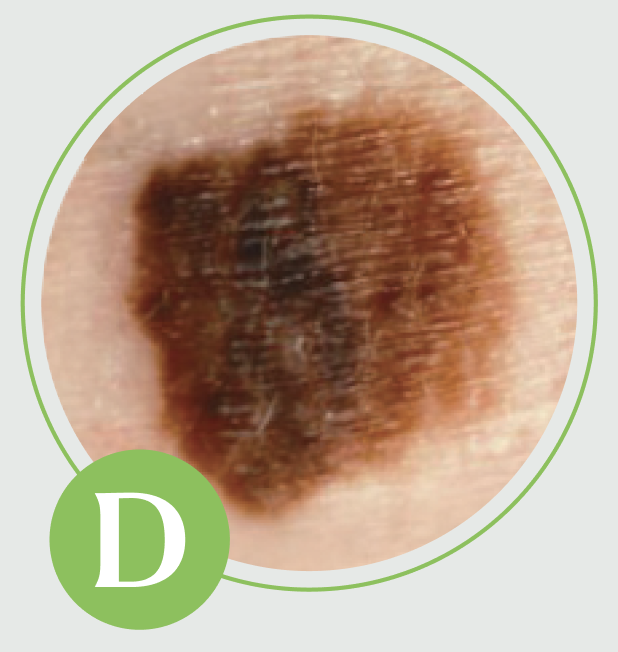
D is for Diameter
Melanomas are usually about the size of a pencil eraser (6 millimeters) when diagnosed.
E is for Evolving
The spot changes in size, shape or color.
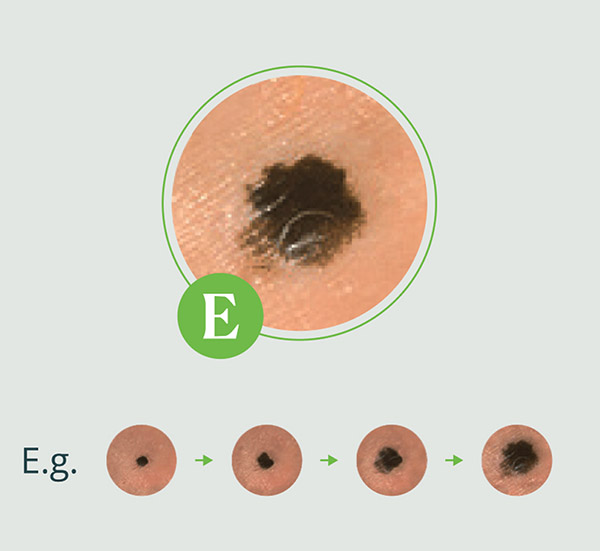
Also use the “ugly duckling” rule: if one mole looks different from your others, it’s safe to get it checked.
Nodular Melanoma: Why This Subtype Needs Urgency
Nodular melanoma grows faster than most melanomas. It often appears as a new, raised, firm bump that enlarges over weeks. It may be black or blue, but it can also be pink, red or skin-colored, which is why some people miss it. It can bleed with minor trauma and may not trip every ABCDE box. If you notice a dome-shaped bump that keeps growing, don’t wait for your annual exam, schedule a skin check as soon as possible.
Melanoma Stages Explained
Staging guides treatment and follow-up.
- Stage 0 (In Situ): confined to the top layer of skin. Excision is usually curative
- Stage I–II (Localized): deeper growth in the skin. Thickness and ulceration guide risk and whether a sentinel lymph node biopsy is recommended
- Stage III (Regional): spread to nearby lymph nodes or skin near the original site
- Stage IV (Distant): spread to organs like lungs, liver or brain
Finding melanoma at Stage 0 or I is the goal, which is why regular full-body skin exams matter.
Everyday Habits to Reduce Your Melanoma Risk
Small, consistent choices add up. Use these daily steps to cut UV exposure and lower risk year-round.
Cover Up Consistently
- Choose UPF shirts and pants, a wide-brim hat, and UV-blocking sunglasses
- Seek shade during peak sun hours (late morning to mid-afternoon)
- Remember reflective surfaces, such as water, sand, concrete, and snow, bounce rays back to your skin
Choose The Right Sunscreen
Sunscreen fills the gaps clothing can’t cover.
- Use broad-spectrum SPF 30+ on face, ears, neck, hands every morning
- Mineral sunscreens containing zinc oxide or titanium dioxide are great for sensitive skin
- Apply a nickel-sized amount of sunscreen for the face, and a shot glass-sized amount for the body
- Reapply every 2 hours, and after swimming or sweating
Skip Tanning Beds
Indoor tanning devices can deliver UV 10–15x stronger than midday sun and increase melanoma risk across all ages. If you want color, use self-tanner, not UV.
Protect Kids Early
There are about 300 cases of melanoma per year in children under 20 years old. Early habits can help protect them for life.
- Keep infants out of direct sunlight and dress them in sun-protective clothing
- For kids 6 months and older, use SPF 30+, hats, shade, UPF swimwear
- Avoid blistering sunburns, a major risk factor later in life
How To Check Your Skin at Home
- Do a monthly head-to-toe check in good light with a hand mirror or a partner
- Include scalp, behind ears, eyelids, under breasts, between toes, soles and nails
- Photograph moles you’re watching, so you can easily spot changes
- Schedule a total body skin exam yearly, or sooner if you have many moles, a personal or family history, or a new or changing spot
More than two people die of skin cancer every hour in the U.S., yet early melanoma has a 99% five-year survival rate. Early action saves lives.
What If You Find A Concerning Spot?
Don’t panic, but don’t wait. Our dermatology team will examine the lesion, decide if a biopsy is needed, and map next steps. Almost all early melanomas are cured with a straightforward, in-office procedure.
Early Detection and Expert Skin Cancer Treatment, Right Here in the South Sound
If you live in the South Sound, you don’t have to travel far for expert skin cancer care. Protect your skin and your health with comprehensive care from Cascade Eye & Skin Centers. From annual full-body skin exams to advanced Mohs micrographic surgery, our dermatologists deliver precise, compassionate care close to home.
Schedule your full-body skin exam today. It could save your life.
Related Posts

Laser Treatment for Rosacea: Understanding Your Options
Rosacea is a common skin condition characterized by redness, visible blood vessels, and sometimes acne-like bumps on the face. It…How to Get Rid of Crepey Skin on Face
Crepey skin occurs when the skin weakens, adopting a saggy and wrinkled appearance that resembles crepe paper. Many patients seek…What to Expect During a Full-Body Skin Exam
A full-body skin exam at Cascade Eye & Skin Centers is an entire appointment dedicated to checking your body for…


Top Treatments for Skin Cancer in the South Sound
Choosing the right treatment for skin cancer can mean the difference between a simple outpatient procedure and a much longer…Redness on Face: Causes and Ways to Reduce It
If you find yourself frequently dealing with persistent redness on your face, you’re not alone. Facial redness can range from…

Get Started
with Cascade
Contact Cascade Eye & Skin Centers, P.C., today to learn more about eye and skin care from the experts.
Get Started
with Cascade
Contact Cascade Eye & Skin Centers, P.C., today to learn more about eye and skin care from the experts.
If you are an existing patient looking to pay a bill, access medical records, view lab results, or communicate with staff, please visit our patient portal for these services. You can also check out our patient portal overview page for additional information.
Get Started
with Cascade
Contact Cascade Eye & Skin Centers, P.C. today to learn more about eye and skin care from the experts.
Please note, we do not offer online scheduling for the eye specialties listed below, only for routine eye exams. Please use the following numbers to schedule specialty eye appointments or to place an order:
LASIK•Refractive Surgery•Cataracts•Eyelid Surgery (Dr. Lam): 253-671-2020
Contact Lenses: 253-564-2935•General number: 253-848-3000
If you are an existing patient looking to refill a prescription, pay a bill, access medical records, view lab results, or communicate with staff,
please visit our patient portal for these services. You can also check out our patient portal overview page for additional information.