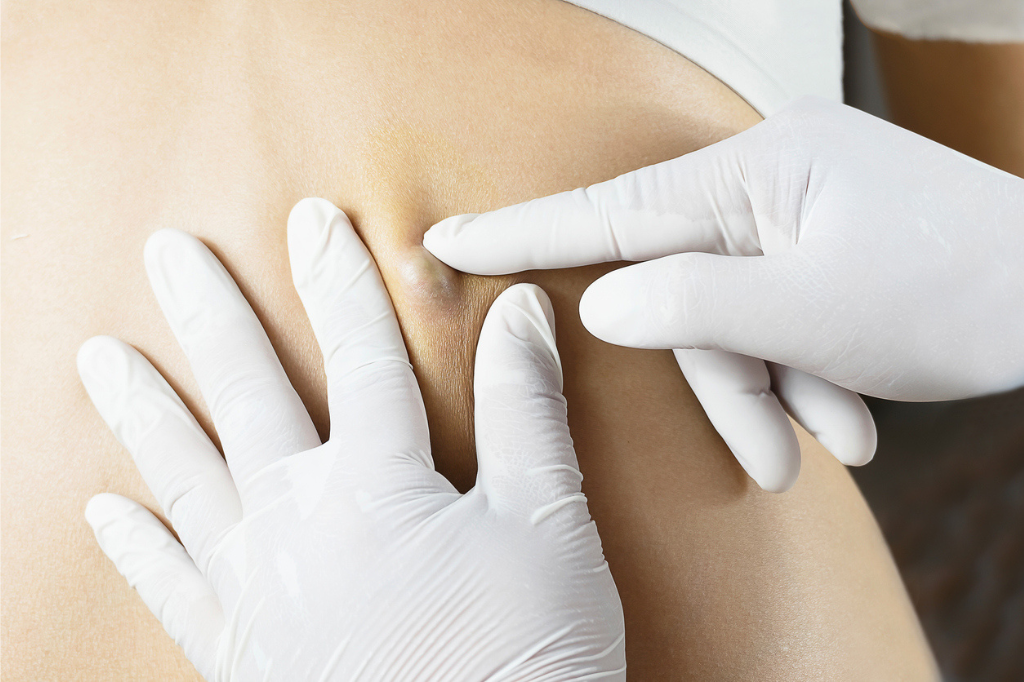
You’re washing your face or running your hand along your neck when you feel a small, smooth bump just under the skin. It doesn’t hurt, it isn’t going away, and you’re not sure whether to worry about it. For many people, that bump turns out to be a cyst. They’re more common than most people realize, and while they’re usually harmless, they can sometimes cause discomfort or need treatment.
So, what is a cyst, exactly? And when should you have one looked at? Here’s what you need to know.

What Makes a Cyst Different From Other Skin Bumps?
Small sacs under the skin, filled with fluid or soft material, these common bumps can appear at any age. Here’s what sets them apart from other skin bumps:
- They are almost always benign, meaning not cancerous
- They tend to grow slowly and stay in one place
- They feel smooth and movable under the skin
- They are not the same as a pimple, wart, or tumor — though they can look similar
Common Types of Skin Cysts
Epidermoid Cysts
Epidermoid cysts are the most common type of skin cyst. They form when skin cells move deeper into the skin instead of shedding normally. Over time, these trapped cells form a sac filled with a thick, yellowish material called keratin, which is the same protein found in your hair and nails. Epidermoid cysts most often appear on the face, neck, back, and scalp. They usually feel smooth and movable, and they may have a small dark dot at the center called a punctum.
Pilar Cysts
Pilar cysts are similar to epidermoid cysts but almost always appear on the scalp. They tend to feel firmer and run in families, so if a parent had them, you may develop them too.
Sebaceous Cysts
True sebaceous cysts are less common than most people think. Many bumps labeled as “sebaceous cysts” are epidermal inclusion cysts. A true sebaceous cyst forms in or near an oil gland and is filled with sebum, the natural oil your skin produces.
Milia
Milia are tiny, white cysts that sit just under the surface of the skin, most often around the nose, cheeks, and eyes. They are very common and often go away on their own without any treatment.
What Does a Cyst Look Like?
Most skin cysts look like a round or dome-shaped bump. The skin over the cyst usually appears normal, though it may look slightly raised. Cysts tend to feel smooth, and they often move a little when you press on them. They are generally painless unless they become infected or irritated.
If a cyst gets infected, it can become red, swollen, warm to the touch, and tender. It may also develop a white or yellow head. An infected cyst can be painful and may need prompt medical attention.
What Causes a Cyst?
Blocked Follicles and Ducts
The most common cause of skin cysts is a blocked hair follicle or duct. When a follicle becomes clogged or damaged from acne, a scrape, or repeated irritation, skin cells that would normally shed can get trapped and form a sac. Epidermoid cysts form when skin surface cells move under the skin instead of shedding, then continue to grow inside the pocket they create.
Skin Injury or Trauma
A cut, scrape, or surgical wound can disrupt the normal growth of skin cells and lead to cyst formation, even months after the original injury.
Genetics
Some people are simply more likely to develop cysts than others. Pilar cysts, in particular, tend to run in families. Certain inherited conditions, like Gardner syndrome, are also linked to multiple epidermoid cysts. Most epidermoid cysts are sporadic, but multiple cysts appearing together can sometimes point to an underlying genetic condition worth evaluating.
Can a Cyst Go Away on Its Own?
Some small cysts, particularly milia, do clear up without treatment. However, most cysts do not disappear on their own and may slowly grow larger over time. Even if a cyst drains on its own, it often comes back because the sac wall is still intact.
It’s important not to squeeze or try to pop a cyst at home. Doing so can push the contents deeper into the skin, introduce bacteria, and cause an infection, making things worse and increasing the risk of scarring.
How Is a Cyst Treated?
When No Treatment Is Needed
Not every cyst needs to be treated. If it is small, not growing, and not causing any discomfort, your dermatologist may simply recommend keeping an eye on it over time.
Treatment Options
When a cyst is large, painful, infected, or in a spot that bothers you, there are several effective options:
- Drainage involves making a small opening in the cyst to release the contents. It can provide quick relief, but the cyst may return because the wall is left behind.
- Surgical removal is the most reliable way to get rid of a cyst for good. The dermatologist removes the entire cyst, including the outer wall, so it cannot refill. This is typically a quick, in-office procedure done with local anesthesia.
- Steroid injections can reduce swelling and inflammation in a cyst that is irritated. This may shrink the cyst, but it does not always remove it completely.
- Antibiotics are used when a cyst becomes infected. They clear the infection but do not remove the cyst itself.
Get Expert Skin Care at Cascade Eye & Skin Centers
Finding a bump on your skin can feel unsettling, but in most cases, a cyst is straightforward to diagnose and treat. At Cascade Eye & Skin Centers, our dermatology team provides thorough evaluations and a full range of treatment options for cysts and other skin conditions.
Serving patients throughout the South Sound, including Auburn, Bonney Lake, Gig Harbor, Puyallup, Sunrise, and University Place, we’re here to help you feel comfortable and confident in your skin. Schedule an appointment today and get the answers you need.